
Grant County Civil Docket Searches
Two online doors lead into a Grant County civil docket. The first, New Mexico Case Lookup, is free. It needs no registration. Punch in the exact case number if you have it. With only a party name, tighten the docket search by court, location, and filing year. Then check any match before you trust it. Weigh the case style, category, filed date, judicial officer, and location. The index shows case-level docket information but stops short of the full document file.
The second door is re:SearchNM, the registered Odyssey interface with a wider reach. Its own guide covers quick searches by case number, party, attorney, or judge. Filters narrow things by category, type, status, filing date, and location. What documents you can open depends on your profile. The security rule in force matters too. A Grant County civil case may look bare or show no document link. Ask the clerk or file an IPRA request. Do not assume nothing exists.
- Choose the court and location that match the notice, case number, or known filing court.
- Search the exact case number first, then try a name with a filing-year and court filter.
- Confirm the displayed case category, location, judicial officer, and filed date.
- Read the event sequence for complaint, response, motion, hearing, order, judgment, and appeal entries.
- Request a specific eligible document or certified copy from the filing court when the public result is not enough.
New Mexico’s civil forms index is worth a look before you dig into a Grant County civil docket. It names the standard forms, which helps you recognize filing types when they appear in the case history.
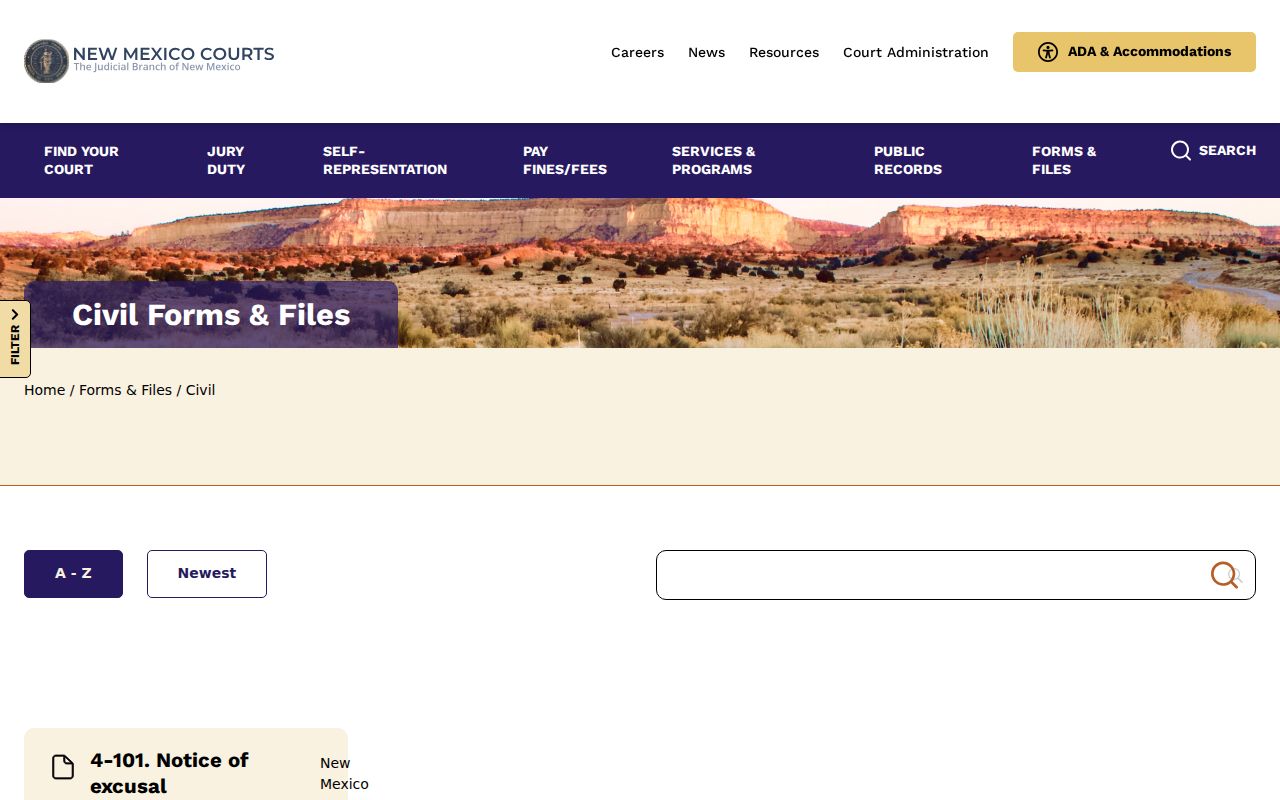
Treat the forms as a vocabulary aid. They are not a case list, and they do not prove that any Grant County civil docket holds a given filing.
Grant County Civil Docket Court Routing
Civil cases in Grant County start with the right court, and that choice turns on the type and size of the claim. The Sixth Judicial District Court serves as the county’s general civil forum. It hears tort, contract, real-property, estate, domestic-relations, and mental-health matters, along with anything else the law assigns it. Probate fights land there too. Grant Magistrate Division I sits in Silver City. Division II sits in Bayard. Both take smaller tort and contract cases that fall under the jurisdictional limit. Whichever court shows in the case result, note it. That is where the clerk keeps the file.
The county recorder runs on a separate track, and its index tracks recorded county instruments. It does not track a district or magistrate lawsuit. A recorded judgment or lien may hint that a case exists. It is no substitute for the civil register, the orders, or the clerk copy. For informal, uncontested probate, there is a separate Grant Probate Court and County Clerk route. Contested estate work goes back to district court. The Sixth District court overview lays out the structure that governs this Grant County routing.
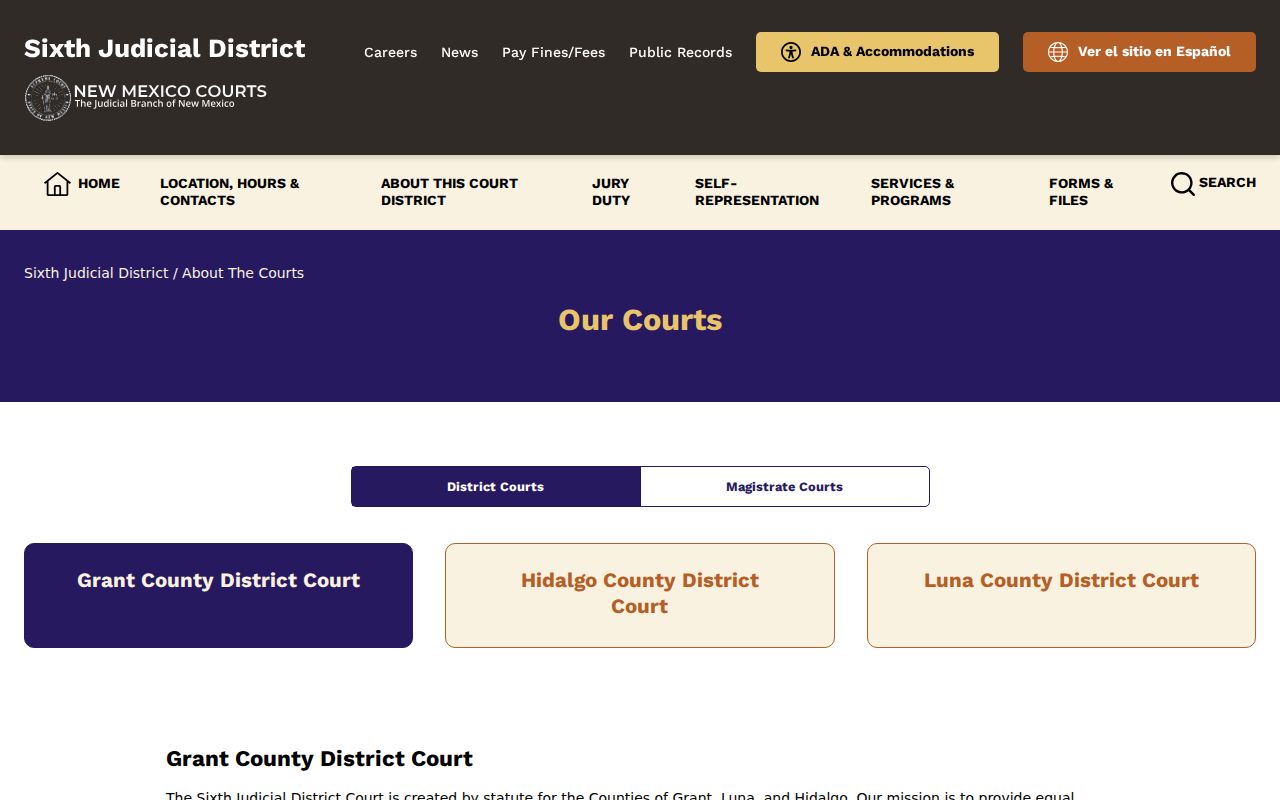
Before you search, ask which Grant County court actually opened the civil file. The right docket lives with the court that keeps the case, not simply the place where the dispute began.
Civil Dockets: What They Show
Think of a Grant County civil docket as a running log. It tracks the case’s public procedural steps. Pull up the detail view. You can often see the case number and style, the case type, the filing date, the location, the judicial officer, and each party’s role. Status, filings, hearing details, and financial fields may appear too. Document links show up only for a registered profile with the right authorization.
Read the events in order. That chronology tells the story. It separates an initiating complaint from an answer, a motion, a hearing notice, an order, a judgment, or a later appeal. A short status label is no substitute for the full sequence.
Treat labels with care. "Closed" marks a system state, not the legal reason the case ended. A default judgment is one procedural event. It is not a full factual finding. When the wording of an order matters, the exact public text beats any paraphrase. A certified clerk copy is the way to go if you need something authenticated.
| Case number and style | The court-assigned identifier and public title, such as court / location / category / year / number. |
|---|---|
| Filing event | May identify a complaint, petition, answer, motion, service entry, or other dated step. |
| Hearing setting | Shows the scheduled date, type, judge or officer, and location when public fields provide them. |
| Order or judgment | Use the exact displayed description and date. A hearing date is not automatically an order date. |
| Status and financials | Status, assessments, payments, credits, and balances are distinct public fields. |
Grant County Civil Docket Filing Timeline
A civil docket reads best as a timeline. The filing event opens the court record, and service or return activity may come next. After that, a response, motion, hearing, order, judgment, or appeal can each appear as its own dated event.
Give every date its own job. A complaint’s filing date proves nothing about when a hearing, an order, or a final result happened. Re:SearchNM’s event and filings searches can help you spot activity across a date range. Your profile still has to permit access.
- Complaint or petition
- The initiating civil filing, identified by the date and code the court makes public.
- Answer or response
- A responsive filing. Its presence does not resolve the case.
- Motion
- A request for court action that can be filed, heard, granted, denied, or left pending.
- Order
- A court action. Read its public description and date instead of inferring its scope.
- Appeal
- A later review step that should be searched with its own court reference when displayed.
One habit worth keeping: save the public event text and its source date. The online register can change once a new filing or order synchronizes, so the version you first saw may not stay put.
What Cases Fill the Civil Docket
Grant County’s civil docket splits across several courts. District court handles the general civil work. Think contract and tort claims, real property, estates, domestic relations, and mental-health cases. Magistrate courts take smaller civil disputes that fall under their dollar limits. Municipal courts will not help you with a civil docket search. Each public result shows the court category, which matters. It keeps you from pulling the wrong file when two cases share a name in different Grant County forums.
| Court | Civil docket role | Search and copy route |
|---|---|---|
| Grant County District Court | General civil matters, domestic relations, contested probate matters, and matters assigned by law. | Case Lookup or re:SearchNM, then the district clerk or court IPRA request. |
| Magistrate Division I or II | Eligible lower-dollar tort and contract matters within the published jurisdictional limit. | Select the listed magistrate location, then contact that division’s clerk. |
| Grant Probate Court | Informal, uncontested probate filings through the county route. | Use the Probate Court or County Clerk channel, not the civil district docket. |
For the magistrate side of a Grant County docket search, the Sixth District magistrate-judges page lists the separate magistrate divisions and who sits in each one.
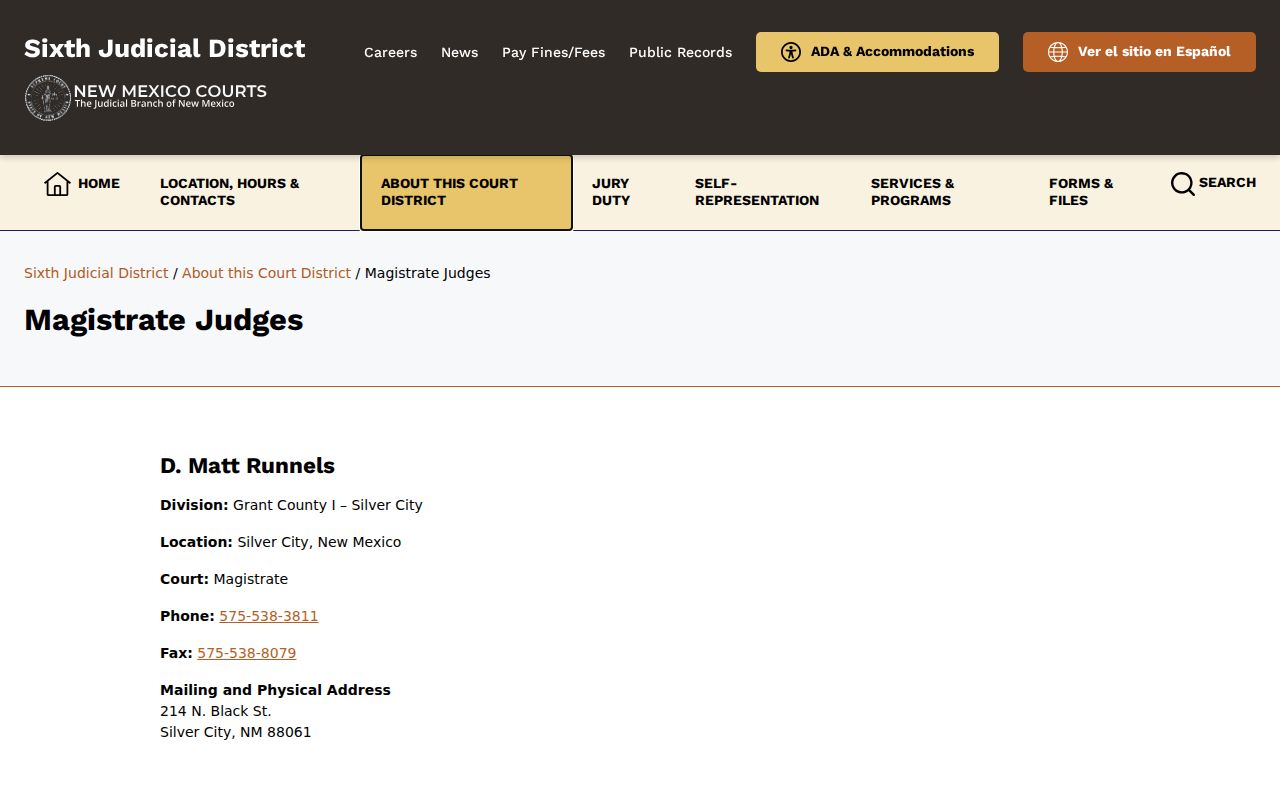
Which magistrate division holds the case depends on the filing and the notice issued. So don't guess a court from a street address alone.
Grant County Civil Docket Recorder Boundary
A deed or a lien in Grant County lives in a different system from the civil docket. So does any other recorded instrument. The Grant County recorder search handles those recorded documents, and its landing page carries its own index rules and image-use statement. It is not Case Lookup. It cannot substitute for a docket search on a lawsuit. The County Clerk page is blunt on another point too. Its clerks do not run searches for people. For a state-court civil record, the right offices are the Sixth District or the magistrate custodian, never the recorder.
The line can blur when a recorded instrument mentions a judgment or a land dispute. The instrument may hand you a name or a date. Either can point toward a court file. Still, only the civil docket holds the event history: hearing settings, motions, orders, and current case status. Need a copy of the instrument itself? Use the recorder. Need an order or the civil register? Go through the filing court or the court IPRA process.
Hearings on the Civil Docket
A hearing setting on a Grant County civil docket is one event, nothing more. It is not a ruling. The Sixth District posts short-range schedules. They cover Grant district court and two Grant magistrate locations. Those calendars reach only the current day and six future days. The courts warn that entries can be missing or changed without notice. For anything further out, turn to Case Lookup, re:SearchNM, the signed notice, or a call to the filing court.
Check the whole package before you act. That means case number, court, date, time, location, and hearing type. A matching name is not enough on its own. If the case record points to a remote or hybrid appearance, follow the directions in the notice. Follow the court's communication too. No calendar entry creates a public video link. None of them changes the attendance terms in the order.
The Grant County court schedule walks through the court-date workflow and the vocabulary of settings.
Note: Keep the court and case number beside every civil hearing date. A setting can move or get reassigned after the public schedule was checked.
Grant County Civil Docket Remote Settings
Is a listed civil hearing remote or in person? The Sixth Judicial District's approved remote and hybrid hearings plan answers that, and nothing on a public calendar does. Under that plan, certain general civil hearings may be presumptively remote in described circumstances. Trials, complex motions, contested preliminary hearings, and jury or bench trials get different treatment entirely. So the notice controls. So does case-specific instruction from the court. A bare date tells you nothing about format.
For division context and the official judicial roster at Grant district court, the Sixth District judges page lists each judge serving the district.
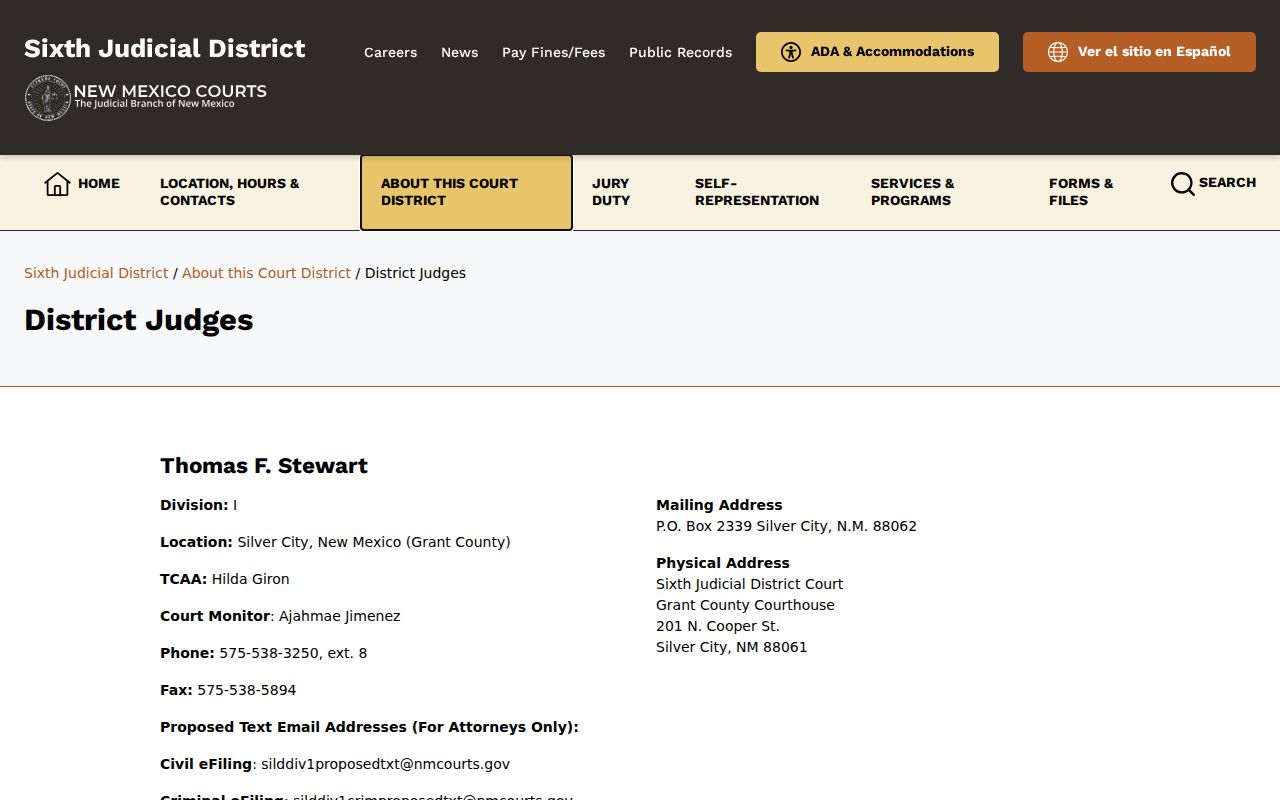
Treat the judicial officer named in the actual case or setting as your confirmation field. Assignments shift, and so do schedules.
Note: Whether a civil setting runs remotely depends on the case notice and current court instruction, not on any general guess about hearing format.
Who Can See Civil Dockets
Who may see a Grant County civil docket? Three things govern that. They are Rule 1-079 NMRA, the Judiciary's online-access policy, and any order touching the record. Case Lookup holds back documents and protected personal identifiers. Registered re:SearchNM access depends on profile and security settings. A sealed or protected item may simply be missing. It may be flagged as restricted, or closed to the account in use. No public result does not mean the matter never existed.
When an eligible record sits outside the online systems, build a targeted request. Name the court, case number, document, and date range. Send it to the custodian. The court IPRA form offers categories for civil, family, and other case documents. Filing it is an access request, not a promise of release. A clerk may respond with inspection, an ordinary copy, or a certified copy. Or the response explains the extra steps a transcript or restricted record requires.
Rule-aware request: The New Mexico court IPRA form asks for requester contact information and a reasonably specific description. Select Sixth Judicial District and the exact court that holds the file.
Grant County Civil Docket Copy Routes
Copies come from the filing court. Grant County District Court sits at 201 N. Cooper Street in Silver City. Call 575-538-3250. Magistrate Division I is at 214 N. Black Street, 575-538-3811. Division II sits at 701 Central Avenue in Bayard, 575-537-3042. Court hours and clerk-counter hours do not always match. Confirm the counter schedule before you drive over. The courts post no guaranteed public terminal schedule for every Grant location.
Fees appear on the Sixth District fee page. District photocopies run $0.35 per page. Magistrate photocopies cost $0.50 per page. Certification is $1.50 each, and tape/CD copies are $4. All are subject to format, redaction, and current procedure. Ask the clerk to confirm the amount. Also ask whether the item comes as an ordinary copy, a certified copy, or through a court reporter. A precise request keeps a docket event, a document image, a judgment, and a transcript from getting confused.
District civil records
Grant County District Court
201 N. Cooper St., Silver City, NM 88061
575-538-3250
Magistrate civil records
Division I: 214 N. Black St., Silver City
575-538-3811
Division II: 701 Central Ave., Bayard
575-537-3042
Note: Request the record by case number, court, and exact document name. That detail lets the clerk route you to the proper access and copy path.